
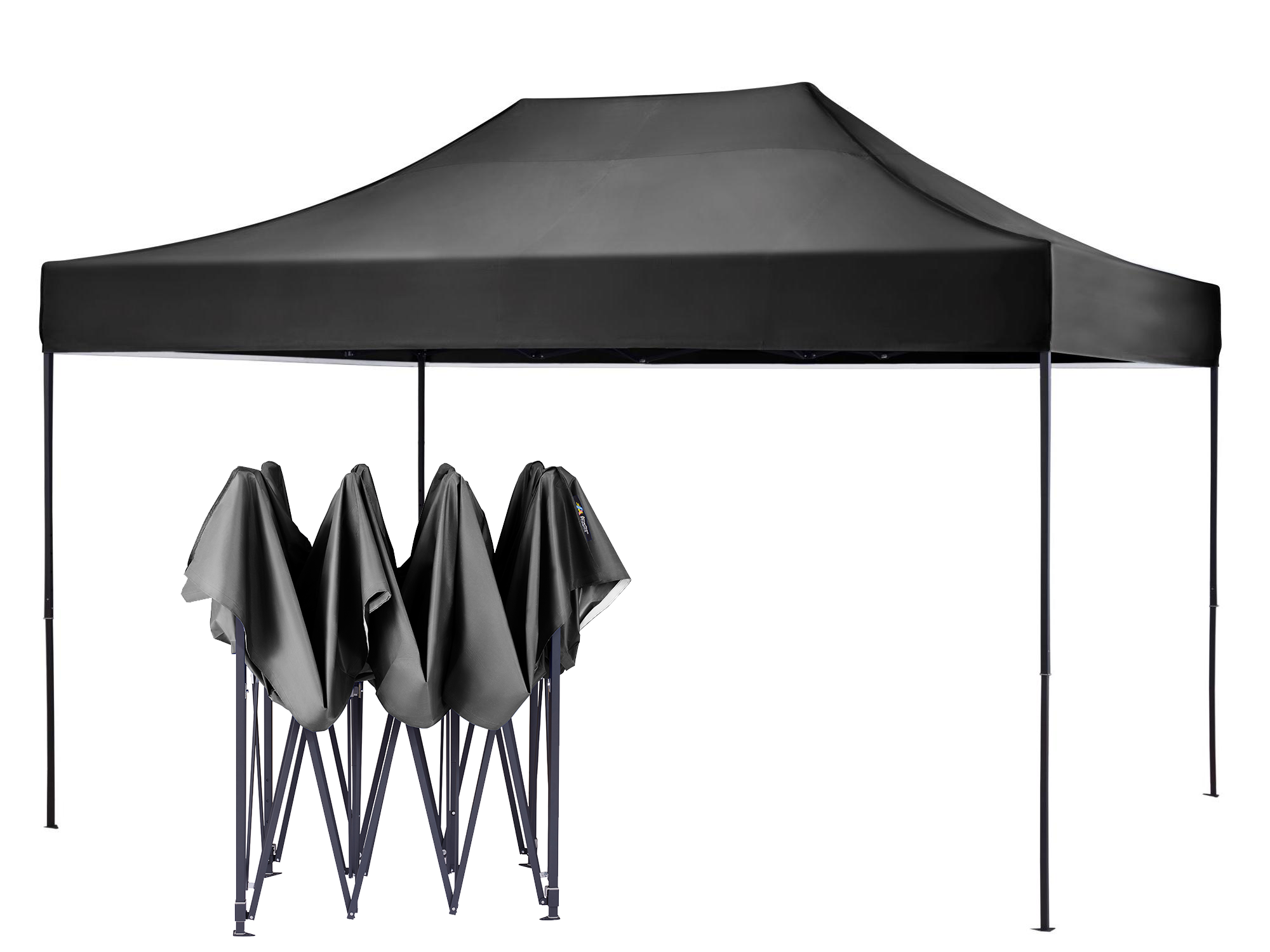
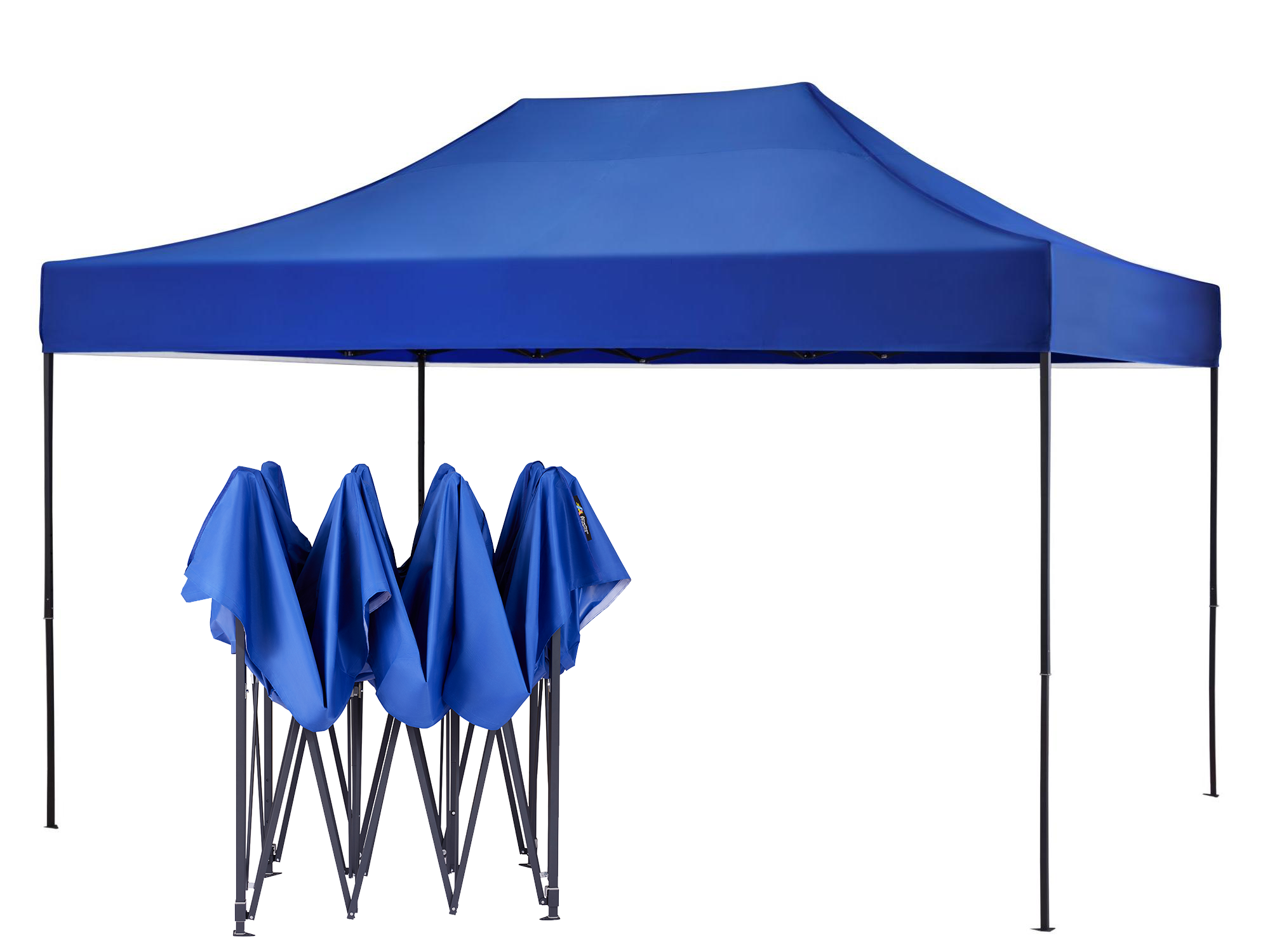
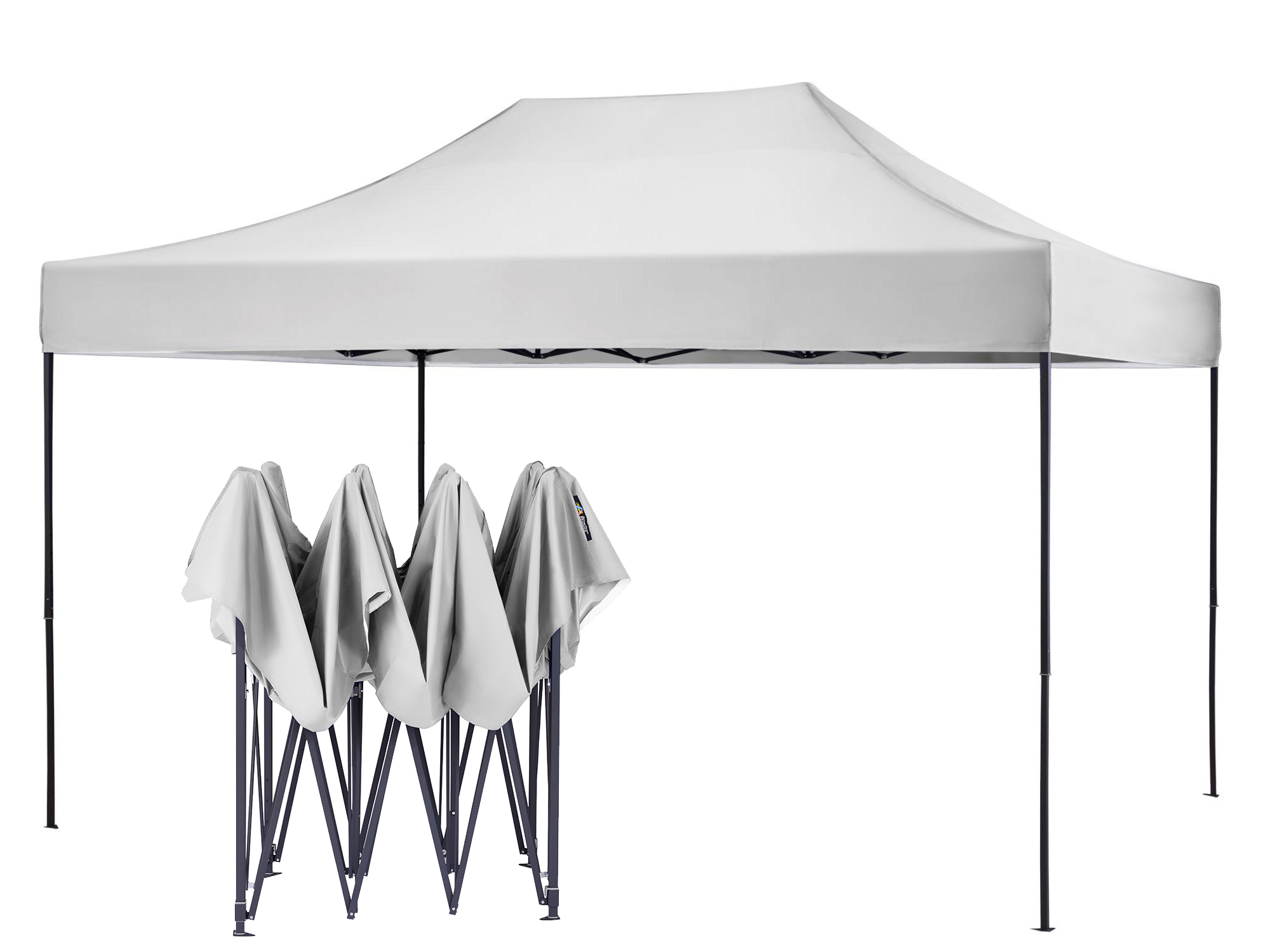
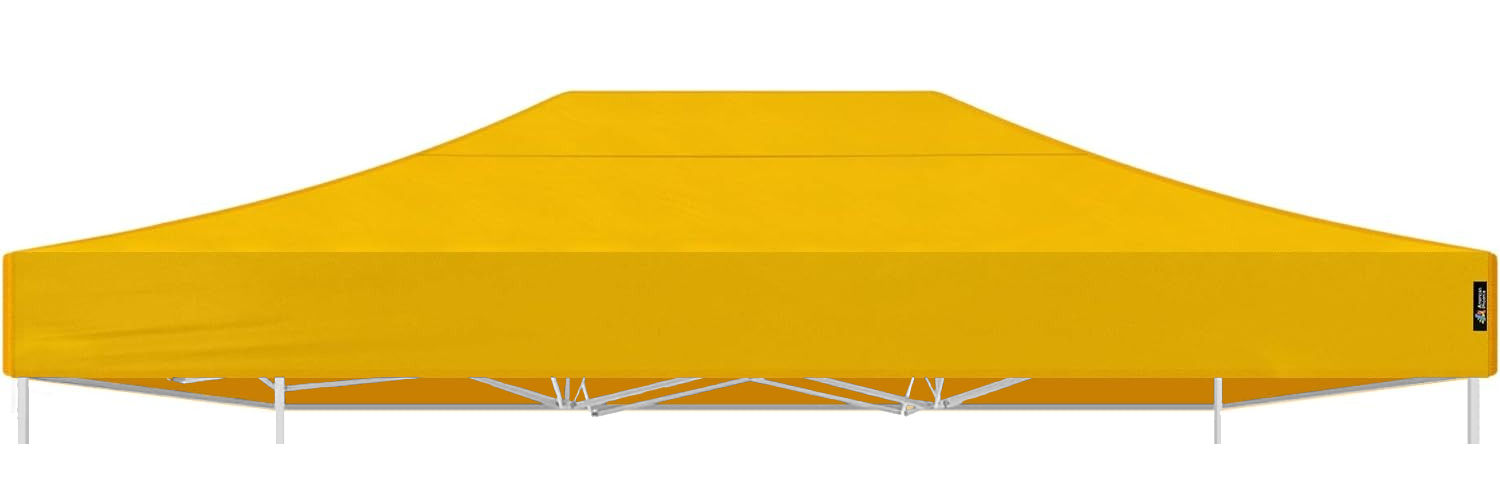
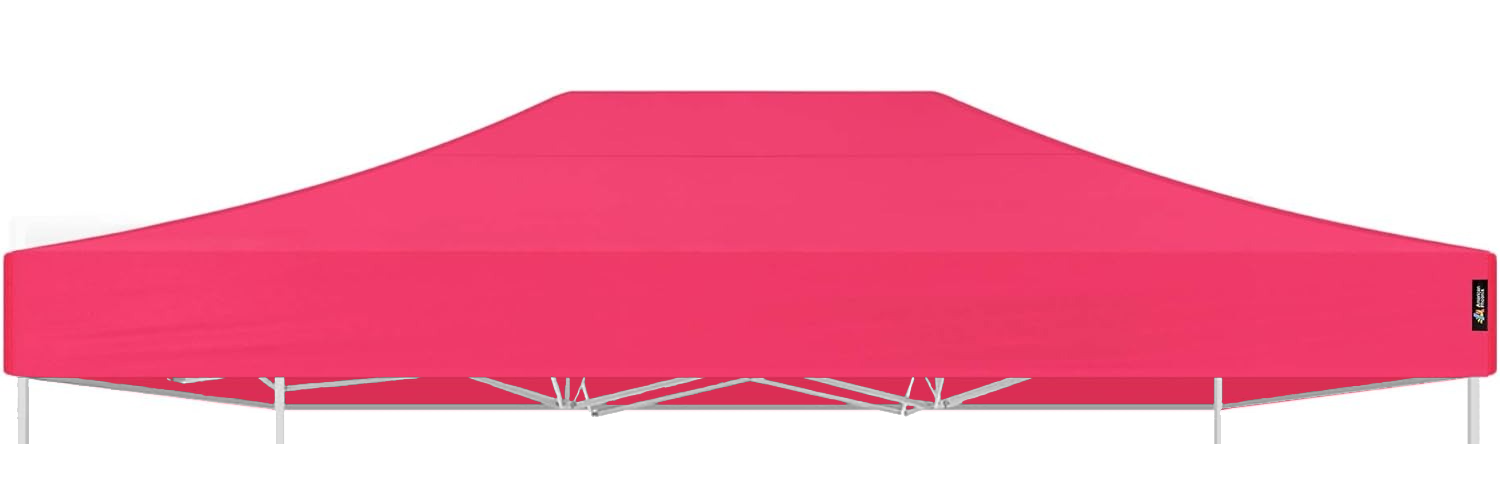
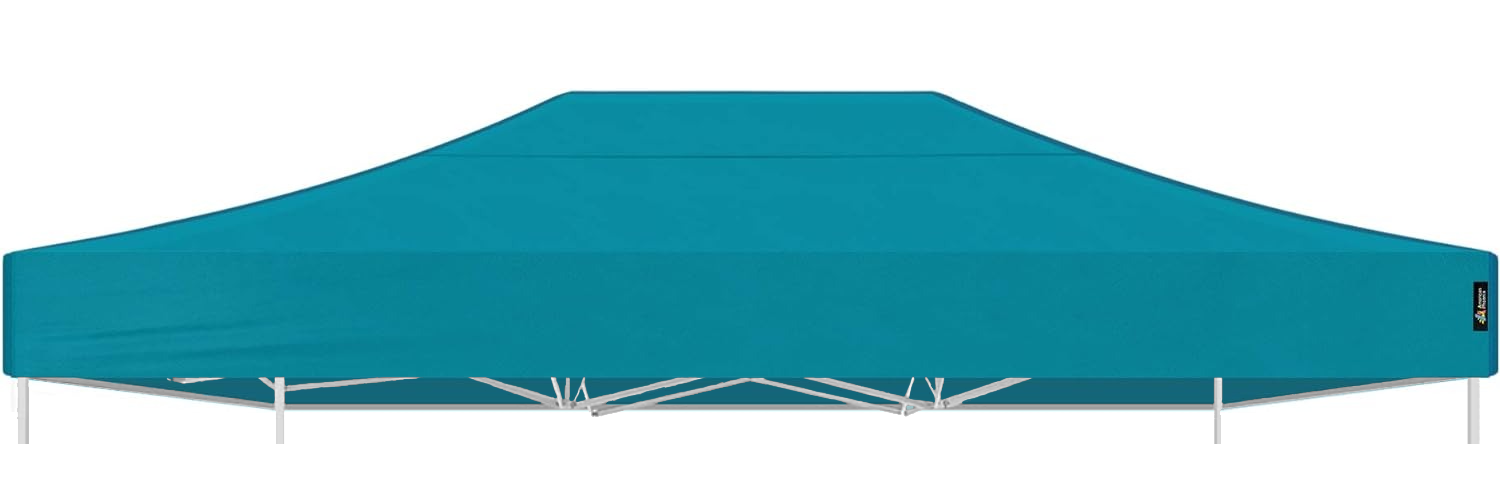

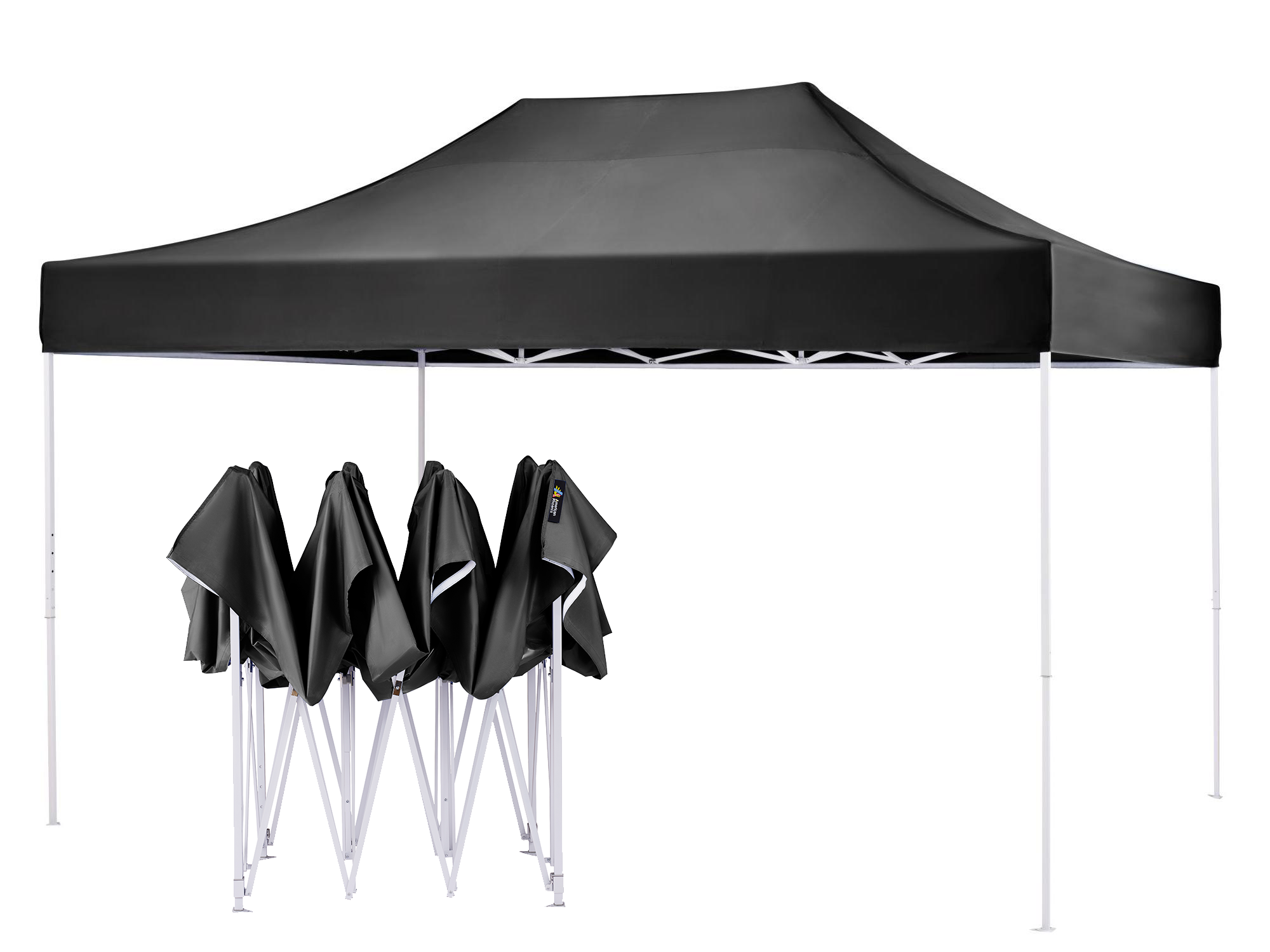
A 10x15 canopy gives you 150 square feet of covered space—50% more than a 10x10 without moving all the way up to a 200-square-foot 10x20.
That extra five feet is where this size earns its place.
If your 10x10 booth is starting to feel crowded with products, boxes, staff and customers, a 10x15 canopy tent gives you room to separate the customer-facing part of the booth from the working area behind it. Our 10x15 collection includes standard colored pop-up canopies, custom printed options and replacement canopy tops.
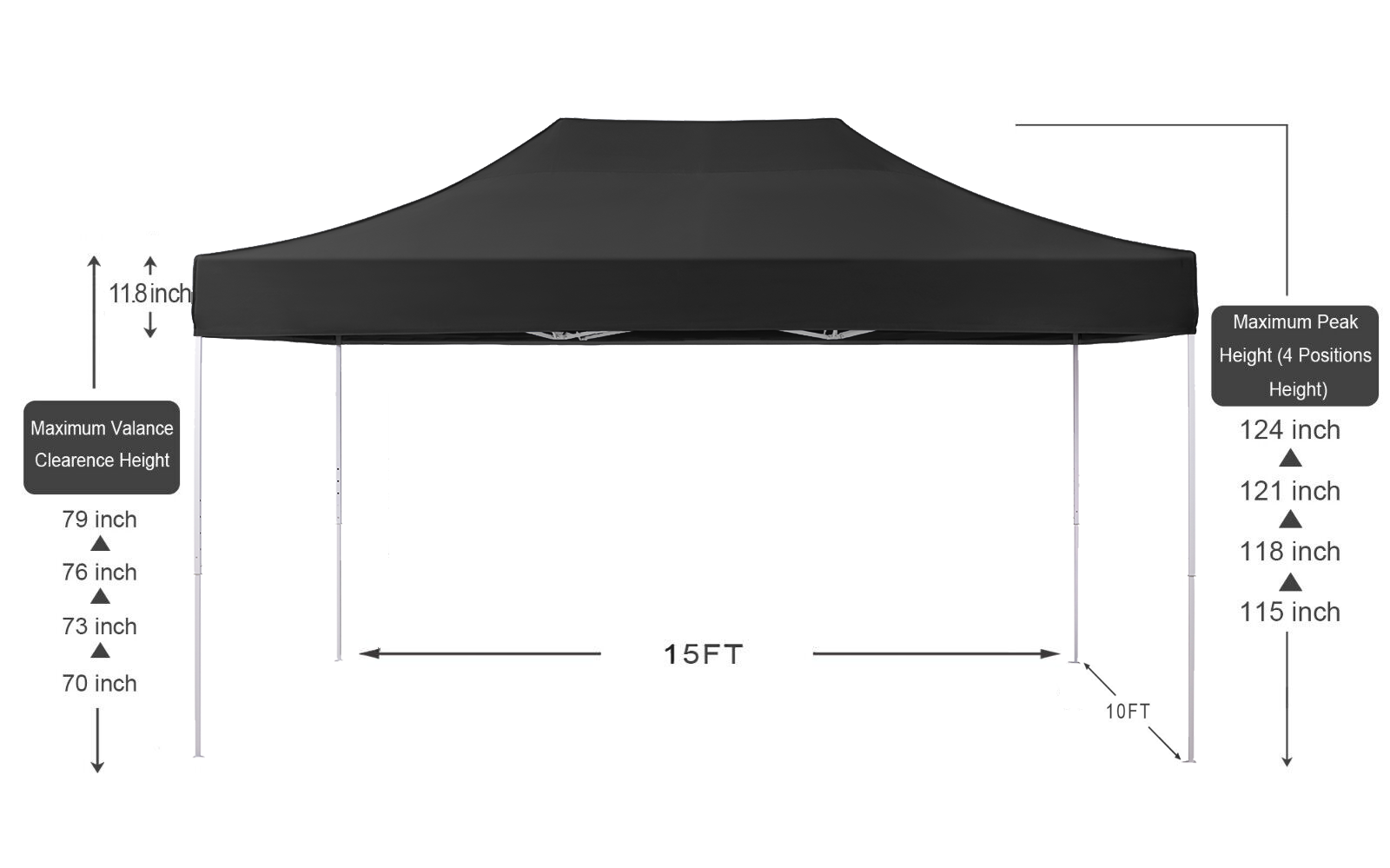
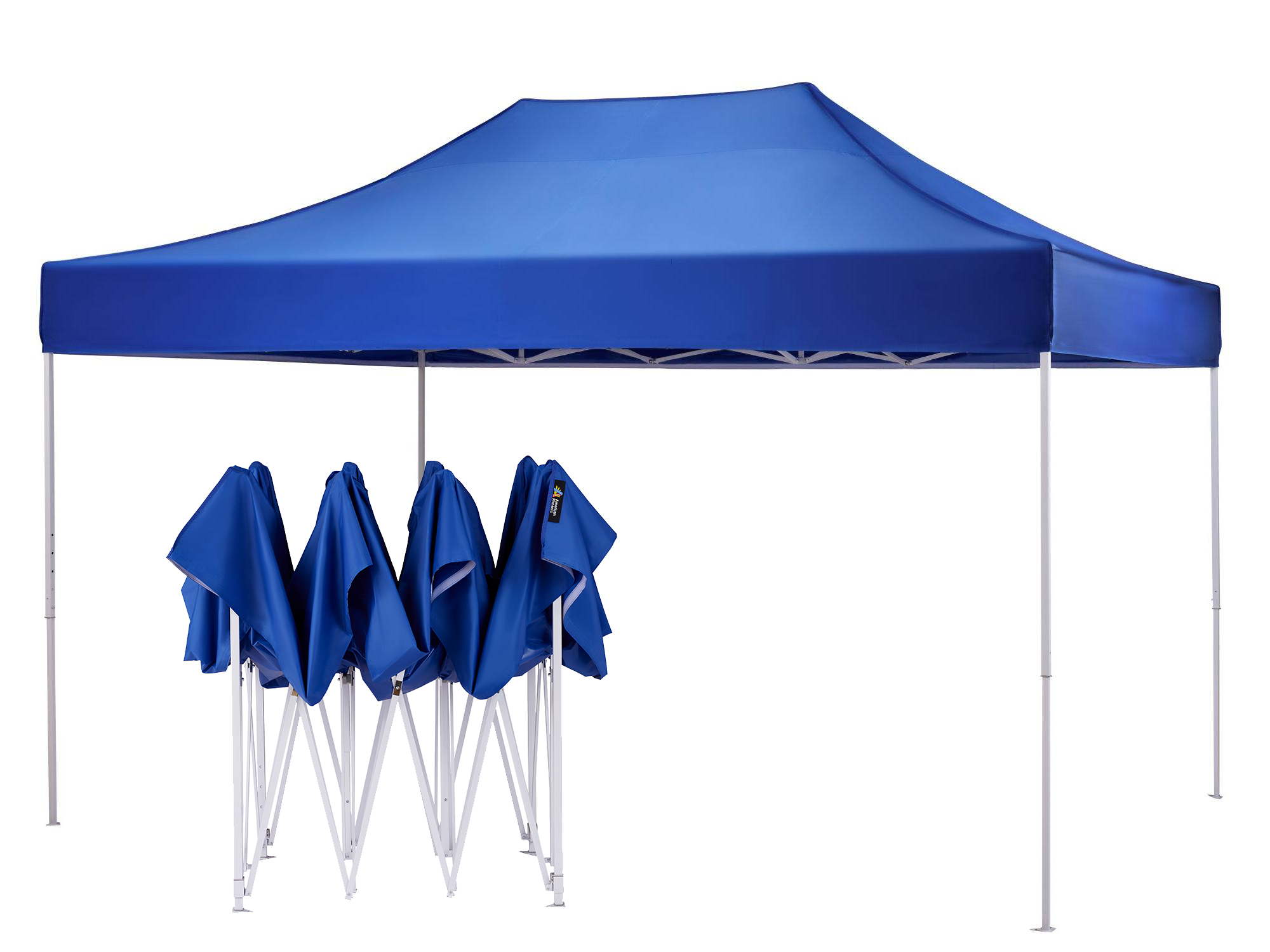
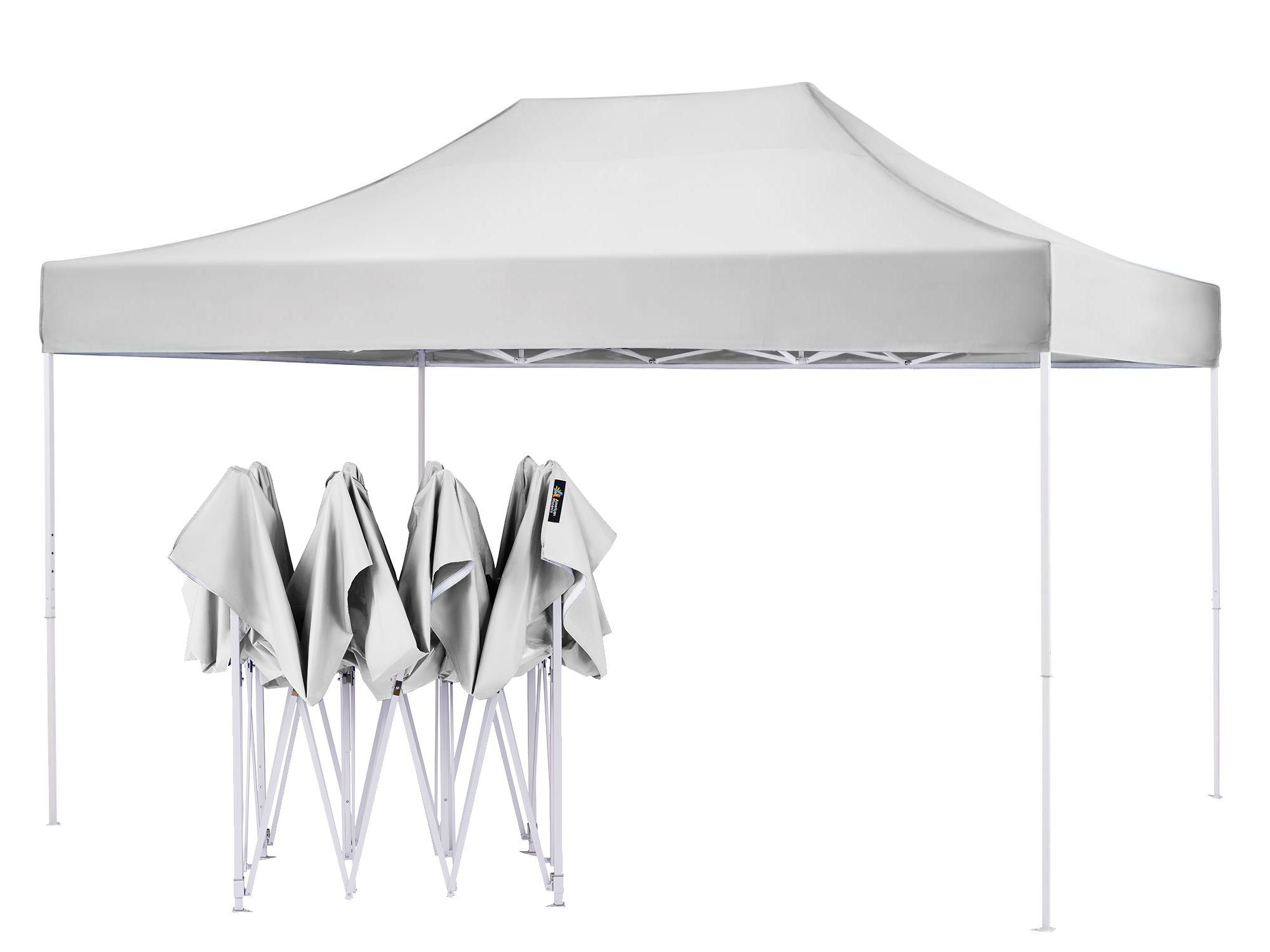
The standard canopy uses a steel square-leg frame with a powder-coated finish, 420D PU-coated polyester fabric and four adjustable height positions. The complete standard package includes the 10x15 frame and 10x15 canopy top.
The Gap in the Size Ladder That a 10x15 Fills
A 10x10 gives you 100 square feet. A 10x20 gives you 200.
The 10x15 sits directly between them at 150 square feet.
That middle size makes sense when the problem with a 10x10 is not the 10-foot width—it is the lack of depth.
A vendor may still want a familiar 10-foot storefront facing the aisle but need more space behind the display. Products start piling under tables. Backup stock moves into the customer area. Staff end up standing where shoppers need to browse.
Adding five feet gives you another 50 square feet to work with.
A 10x20 provides even more room, but it also requires a larger event footprint. If you do not actually need 200 square feet, the 10x15 gives you more working room without doubling the size of a standard 10x10 booth.
Splitting a 10x15 Into Two Working Zones
One of the most practical ways to use a 10x15 is to stop thinking of it as one big rectangle.
Think of it as two zones:
Front 10 feet: customer space.
Rear 5 feet: working space.
That simple split can keep the booth cleaner and easier to operate.
Front-of-House: Display, Counter and Checkout
Keep the customer-facing section focused on what people came to see.
Depending on the business, that might include:
-
Product displays
-
Sales tables
-
Samples
-
A checkout point
-
Demonstration space
-
Signage
The 10-foot frontage can still operate much like a standard vendor booth. Customers see the products first instead of looking through cartons, extra bags and staff supplies.
For retail, an open-front setup can encourage people to step in and browse. For service or food setups, a table across the front can keep the customer in the aisle while staff work inside.
Back-of-House: Prep, Stock and Staff
The extra five feet is useful because the things customers do not need to see still have to go somewhere.
Use that rear section for:
-
Backup inventory
-
Boxes
-
Packaging
-
Bags
-
Staff belongings
-
Restocking
-
Equipment that does not need to sit at the front
Instead of restocking from the aisle or squeezing cartons under every display table, you have a defined working section behind the customer area.
For businesses that spend a full day at a market or event, that extra space can matter more than simply having a wider booth.
Where a 10x15 Footprint Works Best
Do not assume an event that accepts 10x10 tents will automatically accept a 10x15.
A 10x15 uses 150 square feet, and the extra five feet has to go somewhere.
Some organizers work strictly in 10x10 booth modules. Others have larger, corner or end spaces where a rectangular setup works well.
Before booking or ordering, confirm the exact booth dimensions permitted by the event.
Outside organized vendor events, the rectangular footprint can also fit spaces where a square canopy is less efficient, including:
-
Driveways
-
Parking-lot displays
-
Outdoor demonstrations
-
Patios
-
Poolside areas
-
Business promotions
-
Equipment displays
The shape itself can be useful. Ten feet of width stays manageable while the additional length creates more usable space behind it.
Best Applications for a 10x15 Canopy
The 10x15 works best when the extra five feet has a specific purpose.
Food and Beverage Vendor Setups
Food and beverage sellers often need more depth than a simple retail table.
The customer may interact at the front while preparation materials, packaging, supplies and staff stay behind the service area.
A 10x15 gives you enough length to separate those functions more clearly than a 10x10.
If your setup involves cooking equipment or open flames, follow the equipment manufacturer's clearance requirements and the fire rules established by the venue. A standard pop-up canopy should not be treated as a safe enclosure for grills or other high-heat equipment.
Demonstration and Try-Before-You-Buy Booths
A product demonstration needs something a simple sales table does not: room for the customer to stay.
That might mean testing equipment, trying on a product, sitting for a consultation or watching a representative demonstrate how something works.
On a crowded 10x10, that interaction can quickly move into the aisle.
A 10x15 gives you an extra 50 square feet, making it easier to keep the demonstration inside the booth while maintaining a customer-facing display toward the front.
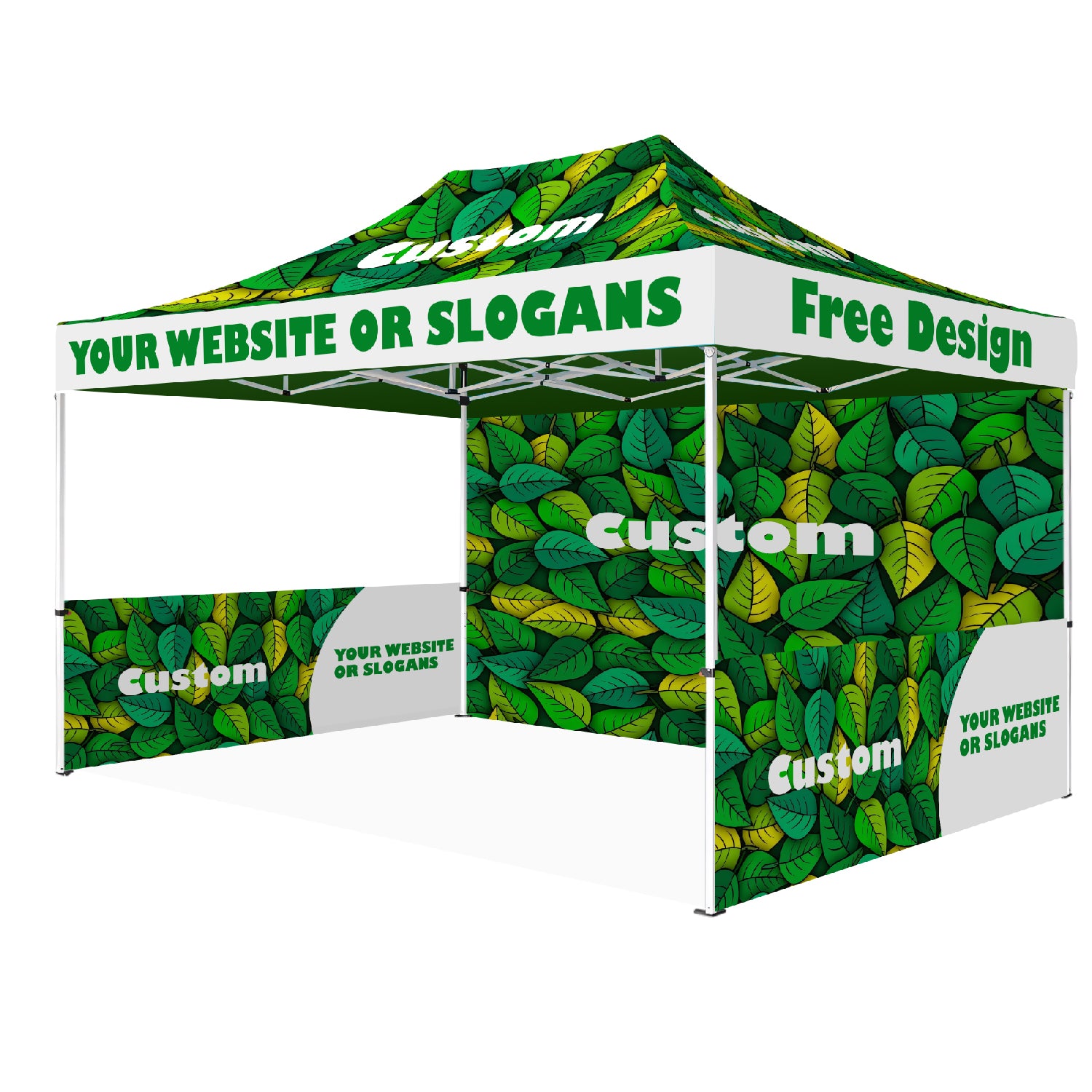
For businesses using the canopy as a branded demo space, our custom 10x15 canopy with logo lets you carry your graphics across the canopy and available wall configurations.
Shared Vendor Booths
A 10x15 can also work when two complementary sellers want to share one larger footprint.
The rectangular layout gives you more ways to divide display space than a 10x10. Each seller can take a section of the perimeter while keeping a shared checkout, storage or working area behind the displays.
Before planning a shared booth, confirm that the event organizer permits multiple vendors within one assigned space.
Driveway, Patio and Poolside Shade
Not every 10x15 is going to a market.
A rectangular canopy often follows the shape of a driveway, patio or outdoor seating arrangement more naturally than a square 10x10.
The standard canopy provides approximately 150 square feet of shade coverage, and the product is sized for roughly 5–9 seated people, depending on the furniture and layout underneath.
Steel Square-Leg Frame for a 15-Foot Canopy
A longer canopy needs a frame that can support the larger rectangular roof structure.
Our standard 10x15 uses a steel frame with square legs. The frame has a matte powder-coated finish designed to resist rust and corrosion.
The straight-leg layout also means the usable ground footprint stays aligned with the 10x15 canopy area rather than pushing the feet farther outside the roof line.
That matters at events where you need to stay inside an assigned footprint.
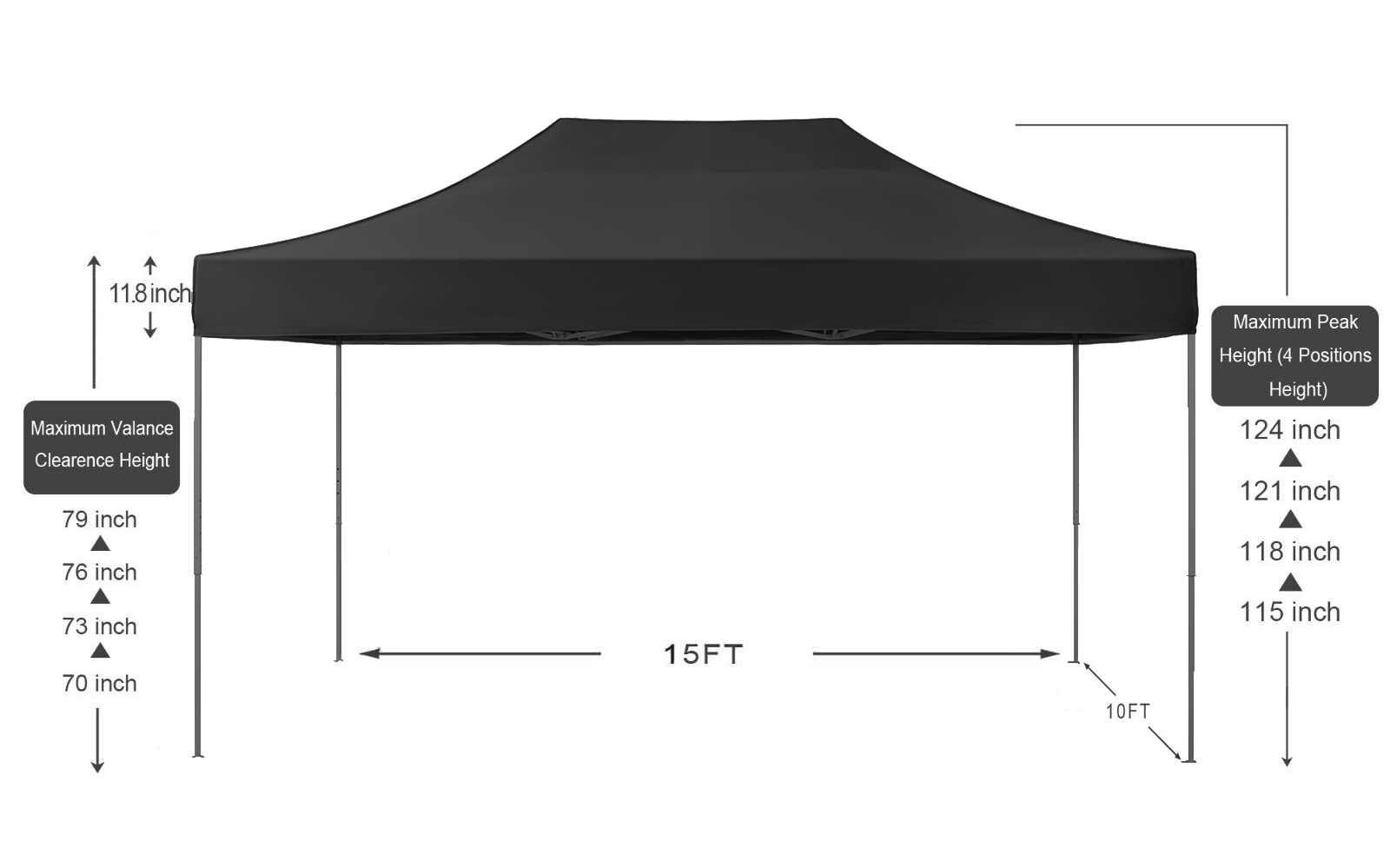
The standard 10x15 offers four adjustable maximum peak heights:
-
9.5 ft.
-
9.8 ft.
-
10.1 ft.
-
10.4 ft.
Push-button adjustment at the four legs lets you select between those height positions.
420D PU-Coated Canopy Fabric
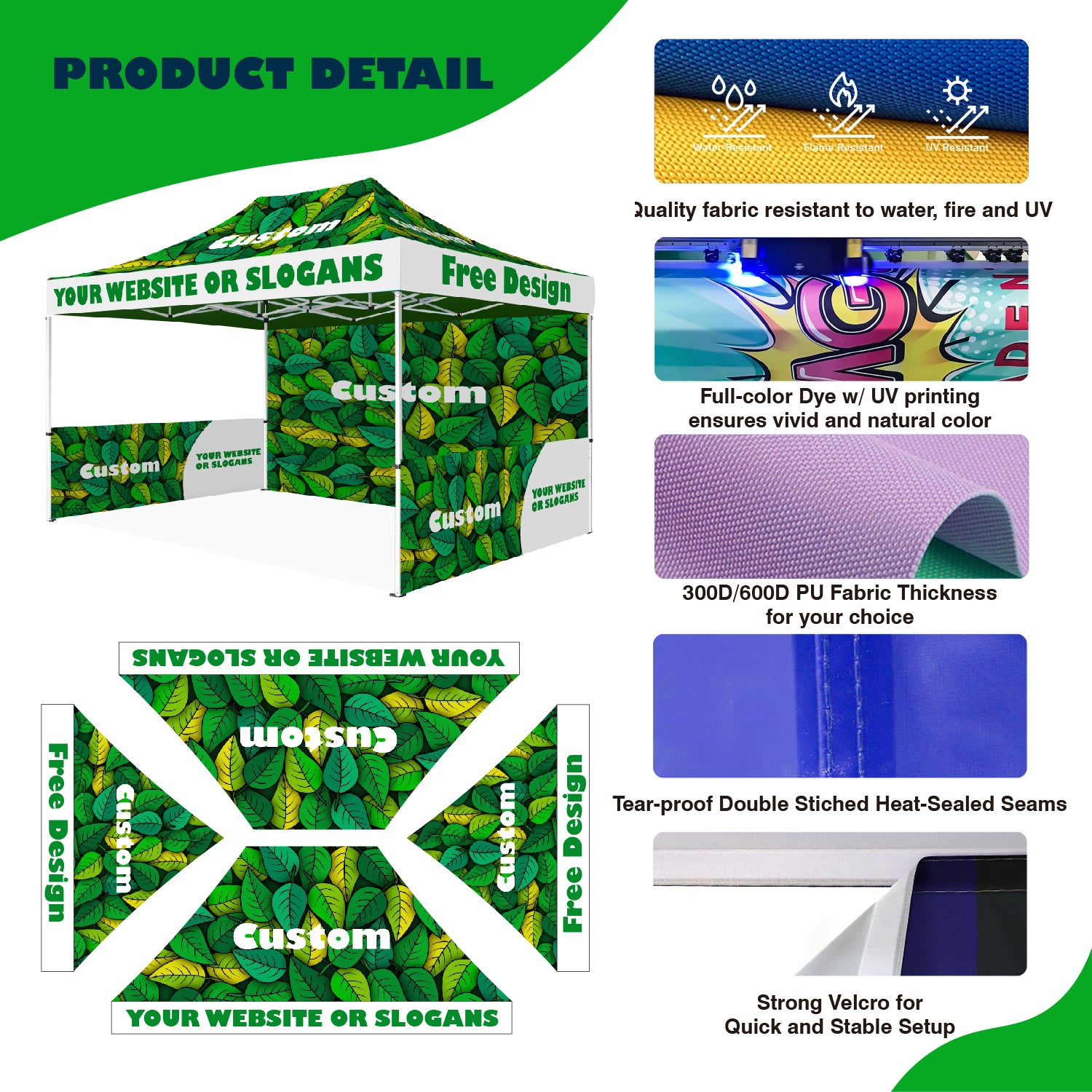
Our standard 10x15 canopy uses 420D polyester with a PU coating.
The fabric is lightweight and water-resistant, with double-layer seam treatment intended to reduce water seepage through stitched areas.
During rain, do not allow water to collect on the canopy roof. Standing water adds load to the fabric and frame and should be avoided.
The underside also includes hook-and-loop attachment for compatible sidewalls.
That makes it possible to run the canopy open-sided or add walls when the application needs more separation.
Buying Sidewalls for a 10x15 Canopy
A rectangular tent needs wall lengths that match the side they are covering.
The two long sides of a 10x15 are 15 feet long. The front and back are 10 feet wide.
That distinction matters when buying walls.
Do not order four identical 10-foot walls and expect them to enclose the entire tent. For a full rectangular enclosure, the wall configuration has to match both the 10-foot ends and 15-foot sides.
You also do not need to enclose every side.
A few practical configurations are:
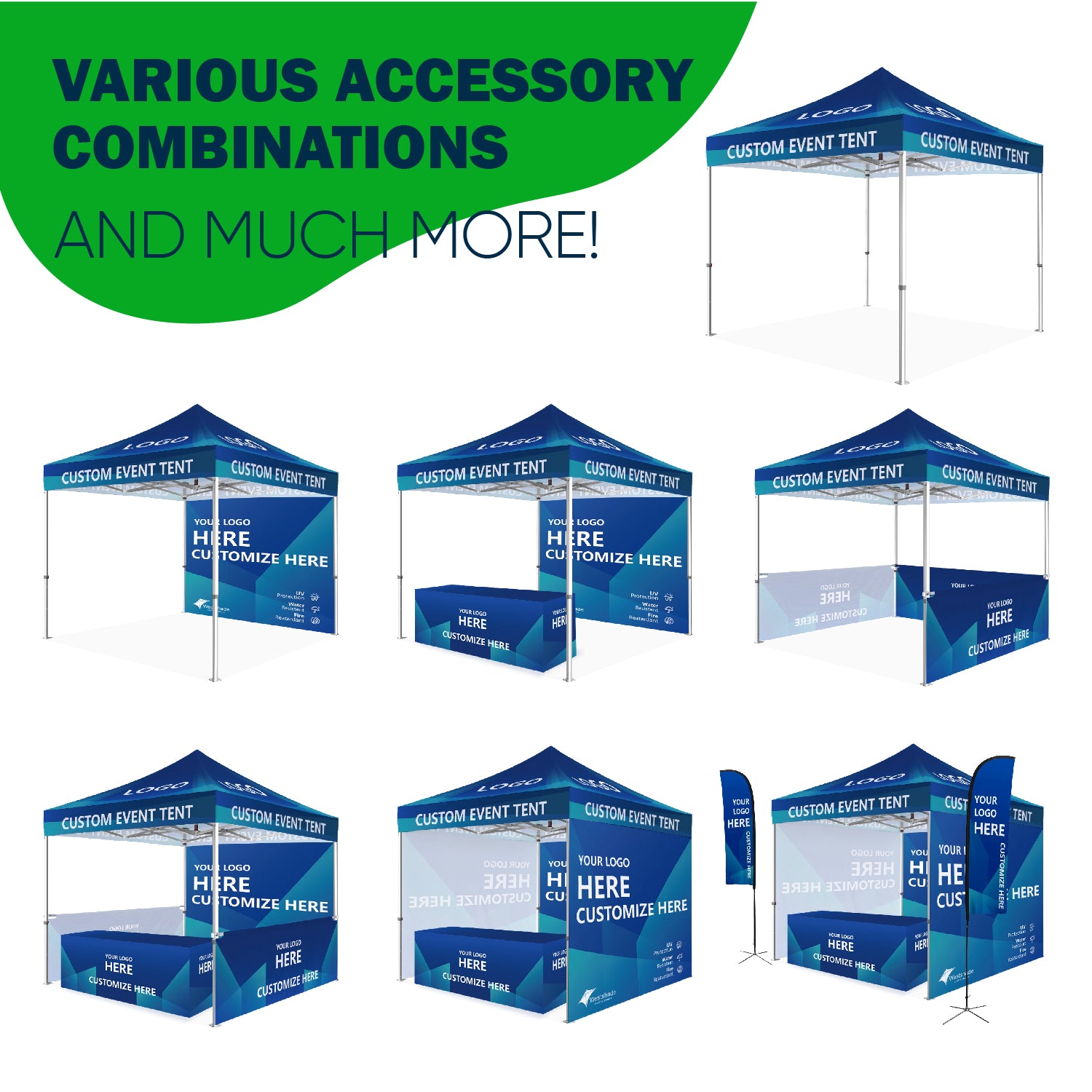
Rear wall only: useful for a display backdrop or separation from the booth behind you.
Rear + side walls: useful when you want a more defined booth while keeping the customer entrance open.
More enclosed setup: useful when privacy or separation matters, provided the venue and product configuration allow it.
Our custom 10x15 canopy also offers multiple custom wall configurations, so the graphics can extend beyond the canopy roof when you want a more complete branded booth.
Custom Printed 10x15 Canopies
A 150-square-foot booth gives you more physical space. Custom printing makes that space easier to identify.
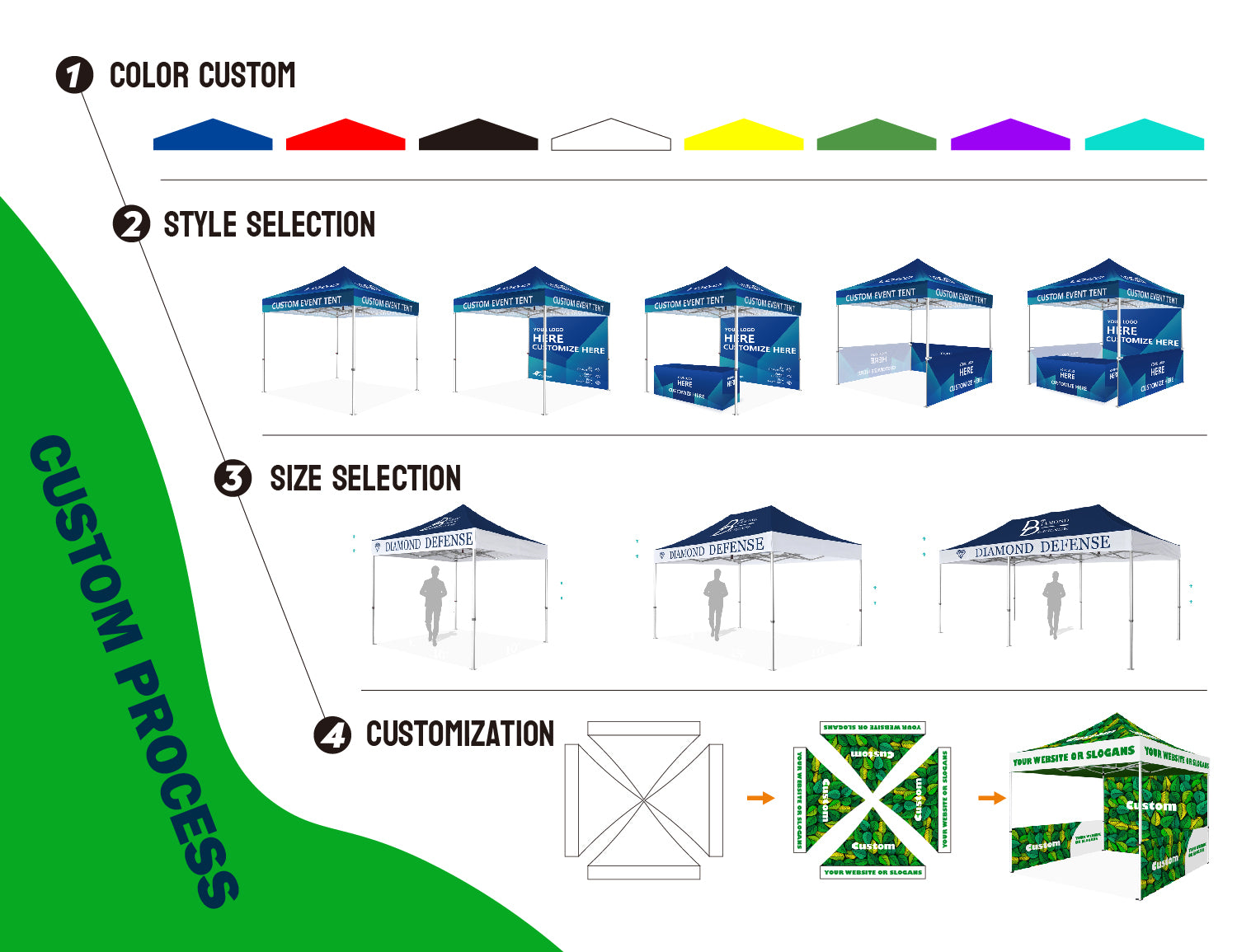
Our 10x15 custom canopy with logo lets businesses, teams and organizations add custom graphics to the canopy and choose from available wall configurations.
Artwork can be:
-
Uploaded as print-ready artwork
-
Sent later by email
-
Reused from an earlier order
-
Built using the available tent-size template
Logo digitizing is also available when needed.
A custom 10x15 canopy tent works particularly well when the extra footprint is being used for product demonstrations, larger retail displays or other events where the booth needs to look like a deliberate branded environment rather than simply a larger shade tent.
Replacement Tops for 10x15 Canopies
You do not always need to replace the complete tent when the canopy fabric reaches the end of its useful life.
Our 10x15 replacement canopy top is sold as the top cover only.
It is:
-
Made for a 10x15 canopy
-
Designed for a straight-leg canopy
-
Made from 200D PVC-coated fabric
-
Waterproof
-
Available in multiple colors
The replacement top is made specifically for American Phoenix canopies and is not listed for other brands.
That is an important distinction. A 10x15 size label alone does not guarantee that a replacement top from one frame system will fit another.
Setup and Transport for a 10x15 Canopy
A 10x15 has a larger frame span than a 10x10, so give yourself more room during setup.
For regular event use, two people are the practical choice. Working from opposite sides makes it easier to expand the longer frame evenly and keep it square as it opens.
Do not force one end fully open while the other side is still collapsed. Expand the frame gradually, position the canopy top correctly, lock the frame and then adjust the legs to the required height.
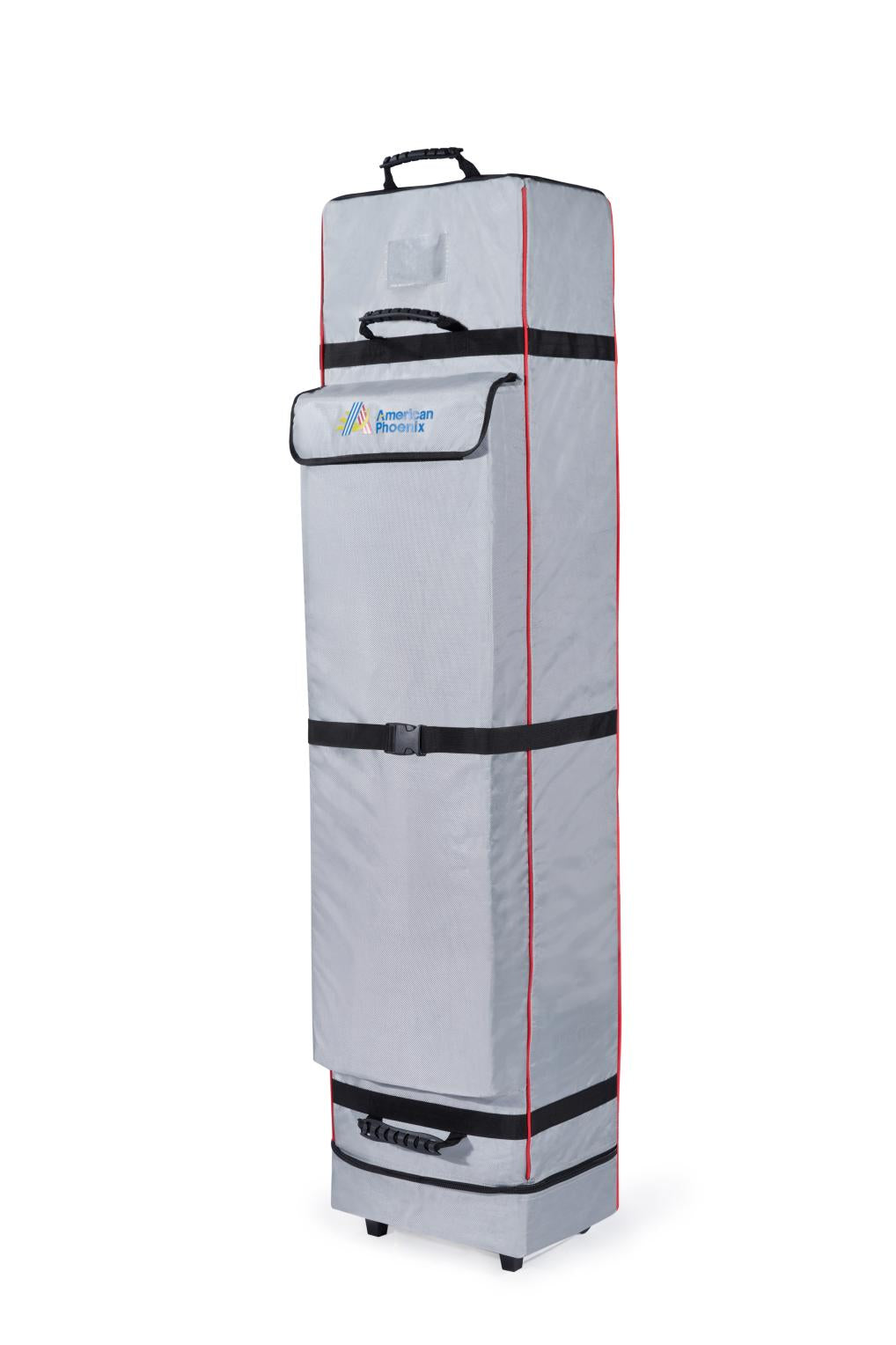
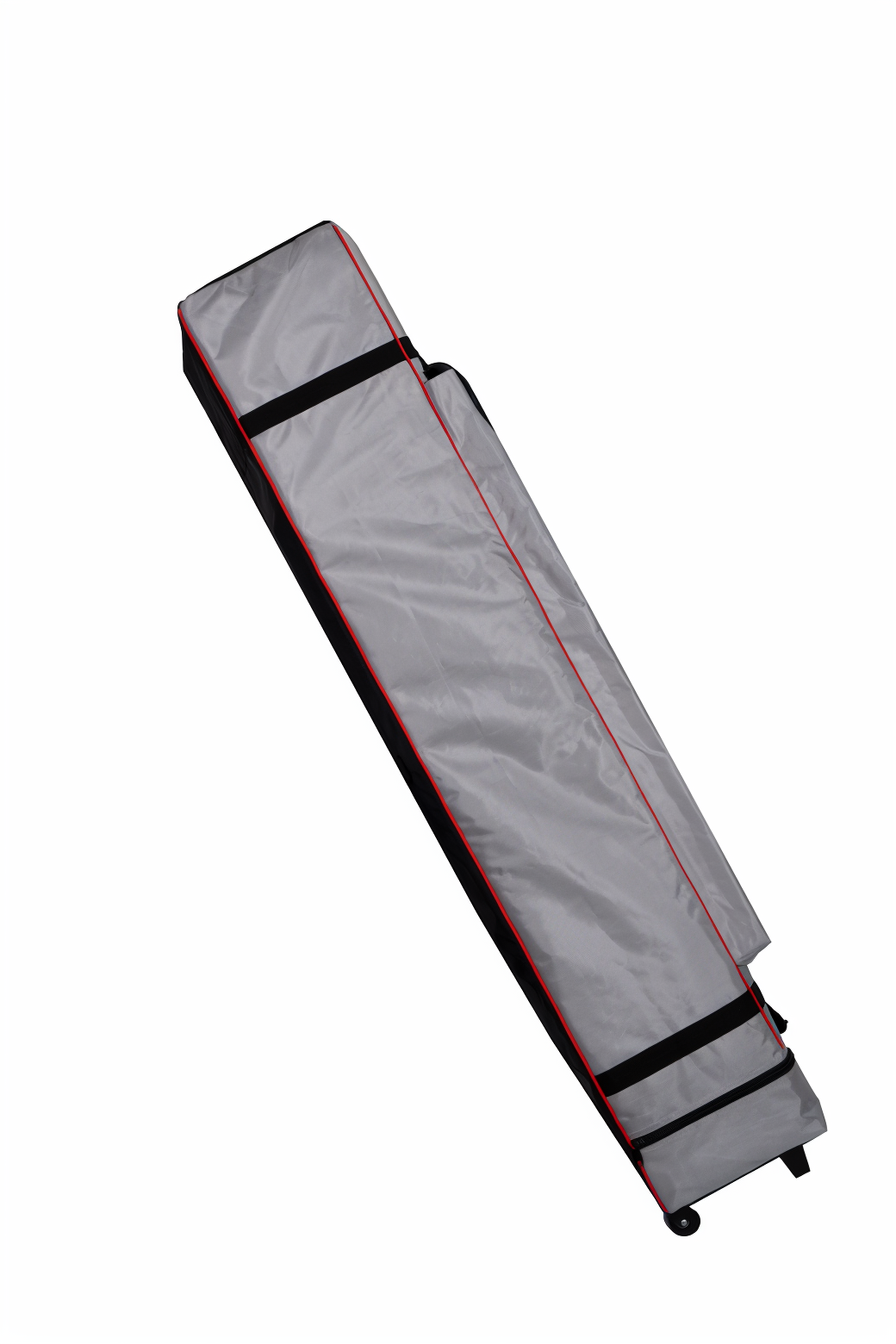
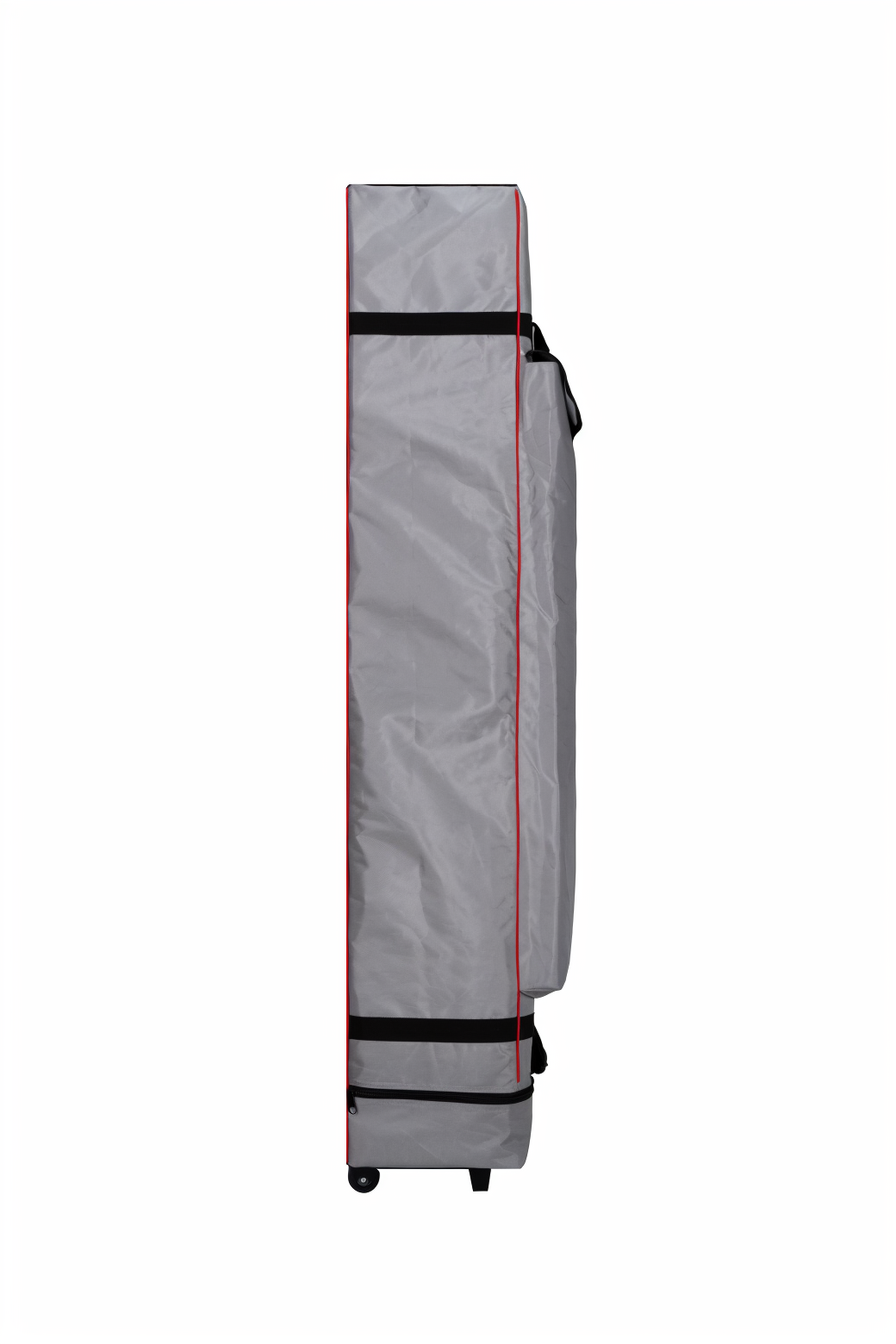
The packed dimensions and weight should also be considered if the tent will travel regularly. A 10x15 is still a pop-up canopy, but it is a larger piece of equipment than a 10x10 and needs enough vehicle and storage space for the folded frame.
If you transport the tent frequently, our collection also includes a roller carry bag designed for 10x10 and 10x15 canopies.
10x10, 10x15 or 10x20: Which Size Makes Sense?
The simplest comparison is floor area.
|
Size |
Covered Footprint |
Difference |
Best Fit |
|
10x10 |
100 sq. ft. |
Baseline |
Standard vendor booth, compact displays |
|
10x15 |
150 sq. ft. |
50% more than 10x10 |
Larger inventory, demos, prep + customer zones |
|
10x20 |
200 sq. ft. |
Twice a 10x10 |
Large displays, multiple tables, larger teams |
Choose a 10x10 canopy tent when 100 square feet covers the entire operation.
Choose the 10x15 when you need more working depth but do not need a full 200-square-foot setup.
Move to a 10x20 canopy tent when the booth consistently needs the larger footprint.
Shop 10x15 Canopy Tents at AP Canopy
The 10x15 is the middle ground for buyers who have genuinely outgrown a 10x10.
You get 150 square feet of covered space, a steel square-leg frame, four adjustable height settings and 420D PU-coated canopy fabric in the standard model. Choose a custom version when the canopy needs to carry your logo, or replace only the top when you already own a compatible American Phoenix frame.
Shop our 10x15 canopy tents and choose the setup that fits the way you actually use the extra space.